$124 Trillion Wealth Transfer: Preparing Heirs and Liquidity
The $124 trillion wealth transfer is a US forecast covering 2024 through 2048, rather than an amount already inherited. Cerulli's detailed estimate assigns $105.3 trillion to heirs and $18.4 trillion to charity. For a family, preparation starts with identifying who owns each asset, who can make decisions and how obligations will be paid. PPLI can serve a defined insurance need within that plan, subject to costs, contract terms and separate income, estate and generation-skipping transfer tax rules.
What the $124 trillion forecast measures
Cerulli's December 2024 announcement reported the rounded headline. Its 2025 explanation gives a $123.7 trillion total in 2023 dollars. The earlier 2021 study, announced in January 2022, estimated $84.4 trillion through 2045.
The two studies cover different 25-year windows and use different dollar bases. Cerulli says restating the earlier, rounded $84 trillion estimate in 2023 dollars would produce about $100 trillion. Higher asset values and shifts in wealth ownership toward older and wealthier households also raised the projection. So the jump in the headline is not $40 trillion of newly created wealth.
The 2024 announcement also projects $54 trillion passing first to spouses before subsequent intergenerational or charitable transfers. That first step is part of the same flow, so do not add it to the headline total. For your own family, it is a reminder to plan for the surviving spouse's cash needs and decision-making authority, not only for the eventual heirs.
Test legal arrangements and heir readiness together
Transfers go wrong for many reasons: a drafting defect, a funding mistake, a tax problem, a family disagreement. You will often hear that the legal work usually holds up and the family usually lets it down, or the proverb about wealth lasting three generations. Neither is hard evidence, and neither tells you where your own plan is weak.
A practical exercise will. Ask the intended decision-makers to walk through the owner's incapacity and then death. Can they find the documents, name the person with authority and say which payments are due? Write down every question they cannot answer. Keep in mind that a well-informed beneficiary is helpful, but the duties still belong to the trustee or executor.
- Identify ownership: distinguish personal property, jointly held assets, trust property, business interests and insurance contracts.
- Identify authority: name the current and successor executor, trustee, agent, business manager and insurance contact. Check how each appointment becomes effective.
- Identify access: document how the authorized person obtains records and account access. Use the institution's procedures instead of circulating passwords.
- Identify obligations: list living costs, debt, taxes, business working capital, trust distributions and policy premiums separately.
- Identify uncertainty: assign an owner and a completion date to each missing document, disputed instruction or unverified assumption.
Turn family governance into working responsibilities
The method below is a practical suggestion; no method guarantees a smooth succession. Match what you disclose, and the responsibility you hand over, to each person's age and capacity, the family's privacy needs, the governing documents and any beneficiary information rights.
| Preparation task | Evidence of completion | Question to resolve |
|---|---|---|
| Explain the ownership map | A dated schedule showing legal owner, economic beneficiary and decision-maker | Does an heir expect to control an asset actually owned by a trustee? |
| Practice a limited decision | A written proposal and follow-up for a permitted charitable budget or supervised investment exercise | Can the participant explain costs, uncertainty and the reason for the decision? |
| Discuss business succession | A record of management roles, voting rights, buyout terms and funding responsibilities | How will an heir outside the business receive value without an unaffordable payment demand? |
| Clarify distribution expectations | A plain-language explanation checked against the trust's actual terms | Which payments are mandatory, discretionary or dependent on available resources? |
| Document disagreements | An agreed process for raising concerns and obtaining independent advice when needed | Who decides when family preferences conflict with fiduciary obligations? |
A family statement of purpose is a good way to explain intentions, but it cannot amend a trust, authorize a distribution or override the law. A dynasty trust may carry property and distribution standards across generations, but duration, amendment powers, administration and tax treatment each need their own analysis. Whether the trust can last indefinitely, and whether it is GST exempt, depends on its governing law and the exemption actually allocated to it.
Define what insurance must contribute
Begin with the cash need: how much, for whom and when. Then compare the ways of meeting it. The real question is whether a particular contract makes the family's plan better once its costs and constraints are counted.
| Resource | Potential use | Constraint to test |
|---|---|---|
| Cash and marketable investments | Pay immediate expenses or provide a reserve | Ownership, access restrictions, market losses and tax from asset sales |
| Business distributions or asset sales | Release value from existing holdings | Working-capital needs, approvals, sale restrictions and realizable value |
| Committed borrowing | Bridge a timing gap | Borrower authority, collateral, covenants, interest and repayment resources |
| Life insurance death benefit | Provide proceeds to the designated beneficiary after a covered death | Contract remaining in force, claims requirements, insurer obligations, payment terms and outstanding loans |
PPLI account performance and contract design can affect death benefits. Confirm the guaranteed and non-guaranteed elements in the actual policy. Cash paid to a trust beneficiary is not automatically cash available to an executor. If a trust may lend to the estate or purchase assets, counsel should review its authority, terms and estate-tax consequences.
Section 101 generally excludes life insurance death proceeds from federal gross income, subject to exceptions such as applicable transfer-for-value rules. Estate inclusion follows a separate analysis under section 2042, including proceeds receivable by the executor and the insured's incidents of ownership. Section 2035 can bring proceeds back into the estate after certain transfers within three years of death. Putting the policy in a trust can help, but each of these points still needs checking.
For policy buildup, qualification under section 7702, applicable section 817(h) diversification requirements and the investor-control doctrine matter. Income-tax treatment of lifetime distributions and loans also depends on section 72 and modified endowment contract status. Tax-deferred buildup inside a qualifying policy does not mean every withdrawal comes out tax-free.
Measure compounding after costs and taxes
The original illustration starts with $50 million and assumes a constant 9% annual return for 20 years. With no annual tax or charges, it grows to $280.22 million. If the entire return is taxed annually at 45%, with tax deducted from the account, the net growth rate is 4.95% and the ending balance is $131.41 million. First-year tax is $2.025 million. The difference between the ending balances is $148.81 million.
Treat those figures as arithmetic benchmarks. The no-charge path shows the mechanics; it is not a PPLI quote. To show how sensitive the comparison is, apply hypothetical annual charges as percentage-point reductions in the same 9% return:
| Illustrative path | Annual rate retained | Balance after 20 years |
|---|---|---|
| No current tax and no charges | 9.00% | $280.22 million |
| No current tax; 1 percentage point of annual charges | 8.00% | $233.05 million |
| No current tax; 2 percentage points of annual charges | 7.00% | $193.48 million |
| No current tax; 3 percentage points of annual charges | 6.00% | $160.36 million |
| All return taxed annually at 45%; no separate charges | 4.95% | $131.41 million |
Each row uses $50 million multiplied by one plus the retained rate, compounded for 20 years. There are no additional deposits, withdrawals or loans. The assumed charges are sensitivity inputs, not market estimates. The table omits entry charges, changing mortality costs, surrender costs, exit taxation and the value of death coverage. Actual returns fluctuate. Taxable portfolios can also defer gains or receive different tax treatment, so a 45% annual tax on every dollar of return is not a universal baseline.
Review actual PPLI costs and economics and use the investment comparison calculator with documented assumptions. None of these account values is a guaranteed death benefit or an estate- or GST-tax exemption.
Keep the transfer-tax calculation separate
For 2026, the federal estate and gift tax basic exclusion is $15 million per individual under section 2010, with inflation adjustments after 2026. The law has no scheduled sunset for that provision, but Congress can change it. Prior taxable gifts, ownership, deductions and any available deceased spousal unused exclusion affect the calculation. Portability requires the applicable election; marriage alone does not create a combined exclusion.
The GST exemption uses the basic exclusion amount but does not include a spouse's unused GST exemption. Review allocations and the trust's inclusion ratio separately. See the generation-skipping trust guide for contribution and allocation records.
Build a liquidity schedule with dated obligations
Federal estate tax is not a flat 40% charge on all assets above a headline exemption. Section 2001 provides the computation and a top rate of 40%. The return is generally due nine months after death under section 6075(a). Section 6151(a) generally ties payment to the original filing deadline. A filing extension does not itself extend payment.
List expenses and liabilities by due date, identify the entity that owes each payment and assign a legally available funding source. Include administration costs, debt maturities, survivor spending, federal and applicable state taxes, and continuing premiums. Stress-test a market decline, delayed insurance proceeds and a business unable to distribute cash. Avoid counting the same reserve for multiple obligations.
Section 6166 offers potential relief for qualifying estates of US citizens or residents where a qualifying closely held business interest exceeds 35% of the adjusted gross estate. The attributable portion of tax may qualify for up to ten installments, with the first principal payment deferred for up to five years after the ordinary payment date. Interest remains payable during deferral. Eligibility, elections and special restrictions matter; certain dispositions, withdrawals or missed payments can accelerate the balance. Do not assume all estate tax qualifies.
Compare insurance, reserves, borrowing and planned sales on their actual terms. A policy is one funding source among several. Further estate planning articles examine the related ownership and transfer structures.
Use the family's timetable
A national forecast running to 2048 does not mean your family has twenty years. Use the following suggested sequence, accelerating it when health, capacity, a transaction or an existing obligation requires action.
- First 90 days: assemble the ownership map, governing documents, beneficiary designations and obligation schedule. Confirm immediate authority and cash gaps with the responsible professionals.
- Following months: resolve document and funding defects, compare liquidity alternatives, and start supervised preparation for the intended roles. Obtain actual policy terms before committing premiums.
- At least annually and after material changes: revisit values, cash needs, family circumstances, tax rules, appointments and coverage. Test whether the designated successors can locate and use the plan.
Track completed actions and unresolved decisions. A signed document, money that is actually available and a successor who knows what to do are three different things. Most plans need all three.
Questions about the great wealth transfer
Does $124 trillion all go to heirs?
No. The headline includes transfers to both heirs and charities. It is a projection across many households and years, not an amount already received or an individual family's expected inheritance.
Why did the estimate rise from about $84 trillion?
The estimates use different time windows and dollar bases. Cerulli also attributes the increase to asset growth and changes in the concentration of wealth. Putting the two headline numbers side by side hides those differences.
Does PPLI eliminate estate tax?
No. Income-tax treatment of a qualifying policy is separate from estate inclusion and GST tax. Ownership rights, beneficiary designations, transfers, trust terms and exemption allocations require their own review.
What should heirs learn first?
Start with the asset ownership map, the people authorized to act, the process for obtaining records and the obligations that must be paid. Then assign supervised responsibilities appropriate to the person's role and the governing documents.
Source and arithmetic check: September 16, 2026. This article provides educational information. For questions about PPLI within a family plan, send an inquiry to PPLI.com.
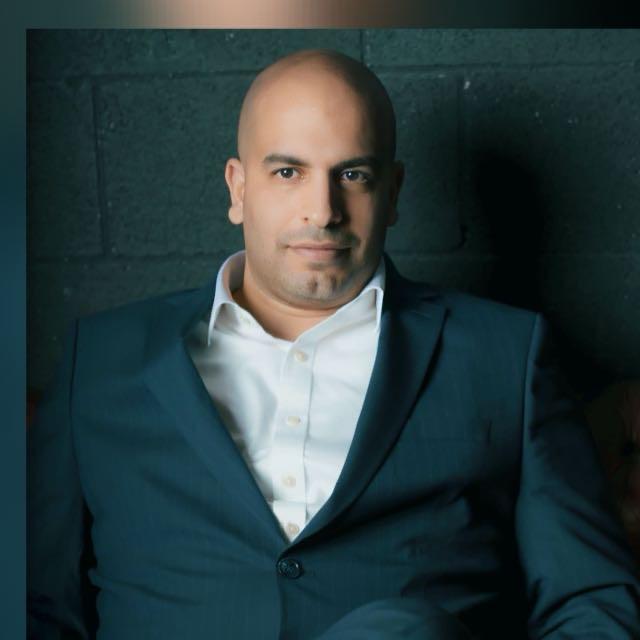
Eldar leads PPLI.com’s strategy, research and partnerships. He acquired PPLI.com in 2020 and has worked on private placement life insurance since then.
Use the consultation form to describe your question and the support you are seeking. Review the Privacy Policy before sharing personal information.
Prefer to begin with a single question? Write to info@ppli.com