Wine Collections and PPLI: US Tax, Control and Costs
Putting a wine collection into PPLI does not make it tax-free. Personal use, investment control, insurer acceptance and US tax rules each need their own answer. A wine-related fund may be worth investigating, but we are not aware of one confirmed as eligible. Keeping the cellar outside insurance and looking at a policy for other cash is often the simpler option. And if you sell appreciated bottles to fund a premium, the tax on that sale is due before the policy even starts. Begin with who owns each holding, what it cost and what you intend to do with it.
A cellar can become a substantial asset over time. Consider a collector who buys cases to drink, sets aside vintages that need time and continues buying from familiar producers. Twenty years later, the inventory may deserve a line on the family balance sheet. That raises a fair planning question. It does not mean the collection belongs in an insurance policy.
Even an independently managed structure that an insurer has accepted still needs its own tax analysis. Calling something a wine fund, or giving a share class an insurance label, does not make it eligible. In researching this guide we did not find a verified, currently available wine-specific insurance-dedicated fund, or a carrier committed to accepting one. Any proposal has to be judged on its actual documents.
The other route is to keep the wines you care about outside the policy and look at PPLI for a financial portfolio, or for the cash left after selling some bottles. That route deserves a fair comparison on its own merits. Just remember that tax on selling part of the collection is still due, whatever you later do with the proceeds.
This guide is written for US-connected collectors and their advisers. It separates settled rules from ideas that would need legal analysis and the insurer's written acceptance. Every family, portfolio, price and amount in the examples is hypothetical: none is a client history, an available product or a performance promise. Research reviewed 17 September 2026.


Start with the bottles you would never sell
Imagine a family with a collection valued at $3 million. Some cases were bought as investments and have never left professional storage. Others include a wedding vintage, birth-year wines for the children and bottles purchased during visits to estates. The inventory system puts a price against every line. That does not make every line an investment.
Ask the owner a simple question: which wines could be sold tomorrow without another conversation? Write the answer next to the valuation. Then sort the rest into wines kept for enjoyment, holdings managed for financial return and bottles meant for children who might rather have cash. One inventory total cannot make those decisions for you.
Those distinctions determine what a sensible arrangement must preserve. If you want to choose which case goes to dinner, lend bottles to a tasting or refuse a sale because the vintage means something to you, continued ownership matters. If you would be content to receive an investment return while someone else chooses, stores and sells the wines, you are describing a financial allocation.
Private placement life insurance is life insurance whose investment assets support the policy's value and benefits. Listing a cellar in the paperwork does not make the wine the insurer's property or an eligible investment. US treatment depends on the contract and how it is run, including section 7702. A valuable collection does not create an insurance need, and it is not automatically an acceptable policy investment.
| What you want | The appropriate starting point |
|---|---|
| Keep, display and drink your wines | Collection ownership, storage, property insurance and succession planning outside PPLI. |
| Earn returns connected with the wine market | Investment due diligence, followed by a separate assessment of whether any proposed vehicle is eligible for the policy. |
| Sell part of a collection and invest the proceeds | A sale and tax calculation first; an insurance suitability and funding review for the remaining cash. |
| Provide heirs with liquidity so they need not sell the cellar hurriedly | Estate planning and an assessment of suitable life insurance, which may or may not be PPLI. |
The difficult part is giving up control, not arranging storage
Moving cases to a professional warehouse can improve recordkeeping and physical security. It does not turn privately owned wine into an insurer-owned investment. Neither does putting an insurance company's name on a spreadsheet while the collector continues to decide every purchase and sale.
Identify the policy, jurisdiction and decision you need to examine. Use the consultation form to describe the issue and the professional support you are seeking.
Describe your question →The IRS's Revenue Ruling 2003-91 treats the insurer as owner on specified facts, including insurer or adviser control of investments and no policyholder direction of particular assets. It also addresses manager selection and prearranged investments. Describing a manager as independent does not recreate those facts. What counts is who can appoint the manager, who gives instructions and what actually happens, not the name on the investment account.
Apply that distinction to a wine proposal. Suppose a collector says, “Use my merchant, buy the cases I identify, and keep the Bordeaux until I tell you to sell.” Calling the merchant an investment adviser does not remove the collector's instructions. The same concern arises if a family member supplies the recommendations or an informal understanding gives the collector an effective veto.
For a proposed wine allocation, ask who actually selects producers, vintages, counterparties and disposal dates. Ask whether those decisions can be made against the family's preferences. The answers need to describe how the arrangement will operate after the policy is issued, including the quiet phone calls when an unusual buying opportunity appears.
Personal consumption is an even clearer practical dividing line. A bottle opened for your birthday is no longer an investment available to support a policy. An arrangement allowing the policyholder to remove bottles for enjoyment raises ownership, valuation and distribution issues that cannot be resolved by calling the removal a tasting allowance. Do not assume that reimbursing a fund afterward makes the original access acceptable.
Imagine the manager sells a wine you love and buys one you dislike. If you could not live with that, you want to keep discretion, and that answer should come before any talk of insurance. The test is practical, not a legal safe harbor: being willing to accept a manager's decisions is necessary, but it does not on its own make the arrangement tax-compliant.
Could a wine fund be held through PPLI?
Possibly. An eligible financial investment with wine exposure could be considered, though that is a structural possibility rather than a green light for any particular fund. The review has to cover the issuer's rules, U.S. tax ownership, diversification, valuation, custody and liquidity together, and a proposal has to pass all of them.
Consider an independent manager proposing a modest wine-related allocation within a broader investment strategy. The manager would need to establish what is being purchased: fund interests, lending exposure, shares in a business or some other asset. Those are economically different propositions. A loan secured on wine involves borrower and collateral risk. Shares in a wine business involve business risk. Neither is the same investment as owning cases of mature Burgundy.
Review the actual fund interests and investor access. Revenue Ruling 2003-92 addresses interests available outside insurance. For diversification, 26 CFR 1.817-5(f) separately provides conditional look-through treatment, including specified investor exceptions. A private fund is not automatically insurance-dedicated, and having wine exposure in common tells you nothing about either test.
So a wine investment platform marketed to wealthy individuals is not automatically something your policy can buy, and an ordinary fund does not become insurance-dedicated because a share class gets a new name. Counsel needs to examine the actual vehicle, who owns what and any layers proposed between the policy and the underlying investment.
The sequence matters. Obtain the investment documents, establish the proposed legal route and ask the carrier for written acceptance before committing capital. The acceptance should identify the actual fund or mandate and its conditions, not simply say that alternatives are permitted. If no acceptable vehicle can be found, the wine investment remains outside the policy.
There can still be a worthwhile result. The family may choose direct investment exposure on its own merits, or it may conclude that another asset belongs inside PPLI while wine remains elsewhere. An insurance structure should earn its place in a portfolio; it should not become a reason to purchase an investment the family would otherwise reject.
Diversification counts investments, not the number of bottles on a list
The general account limits under section 817(h) and 26 CFR 1.817-5(b) are 55%, 70%, 80% and 90% for the largest one, two, three and four investments. They apply to the relevant segregated asset account, not to the family's wealth as a whole, and come with their own exceptions, counting rules and measurement dates.
For a simplified illustration, assume a $10 million account is tested under those ordinary limits, with no applicable exception. A $6 million interest treated as one investment represents 60% and fails the single-investment limit. Listing hundreds of wines inside that fund does not fix the calculation unless a valid look-through analysis changes what the account is treated as owning.
At $4 million, that interest would represent 40%, but the other limits and eligibility tests remain. Interests in the same commodity are aggregated, so different vintages or cases are not automatically separate investments.
Monitor valuations and purchases together. Under section 1.817-5(d), qualifying market fluctuations do not alone make a previously compliant account nondiversified; an acquisition that contributes to the discrepancy can change that result. A falling market does not always require an immediate sale. Document the analysis and contract requirements.
What happens to the gain already sitting in your cellar?
Keep the gain already in the bottles apart from anything the policy might earn later. Calling a transfer a contribution, rollover or restructuring does not change how it is taxed; what matters is what is handed over, what comes back and which recognition rule applies.
Under Section 1001, a sale generally requires a calculation of gain or loss using the amount realized and adjusted basis. Section 1035 provides nonrecognition treatment for specified exchanges of insurance and related contracts. There is no equivalent for swapping wine for a life policy. Any transfer in kind needs its own analysis, and a carrier's willingness to look at an asset tells you nothing about the tax.
The IRS includes alcoholic beverages in its collectibles discussion in Publication 550. Wine held as a capital asset for more than one year can produce gain taxed at up to the 28% federal collectibles rate. That is a ceiling, not a flat rate on every sale; the actual figure depends on the taxpayer's circumstances and the capital-gain calculation.
The 3.8% net investment income tax may also apply, depending on net investment income, filing status and modified adjusted gross income. State taxes can add another layer. Wine held as business inventory, short-term holdings and personal-use losses are each treated differently, so no single percentage describes every collector's position.
Holding wine through a fund does not necessarily turn collectibles gain into ordinary long-term securities gain. Section 1(h)(5)(B) addresses certain partnership, S corporation and trust interests by reference to underlying collectibles appreciation. Find out how the vehicle is classified for tax before applying a rate to a fund sale.
Here is a deliberately transparent sale example. A U.S. individual sells investment wine held for more than one year. Assume a $1 million adjusted basis, a $1.8 million gross sale price and $150,000 of selling expenses that are properly taken into account in computing the amount realized. Assume further that the entire gain is taxed at the maximum 28% collectibles rate and is fully subject to the 3.8% net investment income tax. Those assumptions are illustrative, not a prediction of your tax bill.
| Illustrative calculation | Amount |
|---|---|
| Gross sale proceeds | $1,800,000 |
| Less assumed selling expenses | ($150,000) |
| Net amount realized | $1,650,000 |
| Less adjusted basis | ($1,000,000) |
| Illustrative taxable gain | $650,000 |
| Federal tax at an assumed 28% | ($182,000) |
| NIIT at an assumed 3.8% on the full gain | ($24,700) |
| Cash after selling expenses and those federal taxes | $1,443,300 |
The final figure leaves out state and local taxes, other adjustments and any later insurance costs. It is the cash left from the sale, not the gain. If the family later uses some of it to pay a premium, the illustrated $206,700 of federal tax is still owed. Any insurance analysis starts from the capital actually left afterward.
This is also why an accurate basis file is valuable. An auction estimate cannot reconstruct what was paid for each lot. Mixed purchases, incomplete invoices and partly consumed cases can complicate the records. Ask the tax adviser to settle the basis and the treatment of expenses before comparing a sale with keeping the wine. Past storage and travel costs do not all add to basis.
A warehouse receipt is only one part of the evidence
Suppose two cases carry the same producer, vintage and bottle size. One has a documented chain from an established merchant to professional storage. The other has spent years in several private homes, and the purchase invoice is missing. A price database may show the same reference wine for both. A buyer may not offer the same amount.
That difference is central to any investment assessment. A manager needs evidence of what exists, where it is, who owns it and whether it can be sold. A family needs the same evidence even if the wines never go near a financial structure.
Start with an inventory that identifies producer, vintage, format, quantity, acquisition details and storage location. Link it to invoices, condition reports and warehouse confirmations. Record claims, damaged labels, leaking bottles and movements between facilities. Where authentication is warranted, identify who performed it and what their report actually concludes. A photograph of a famous label is not proof of authenticity or clean title.
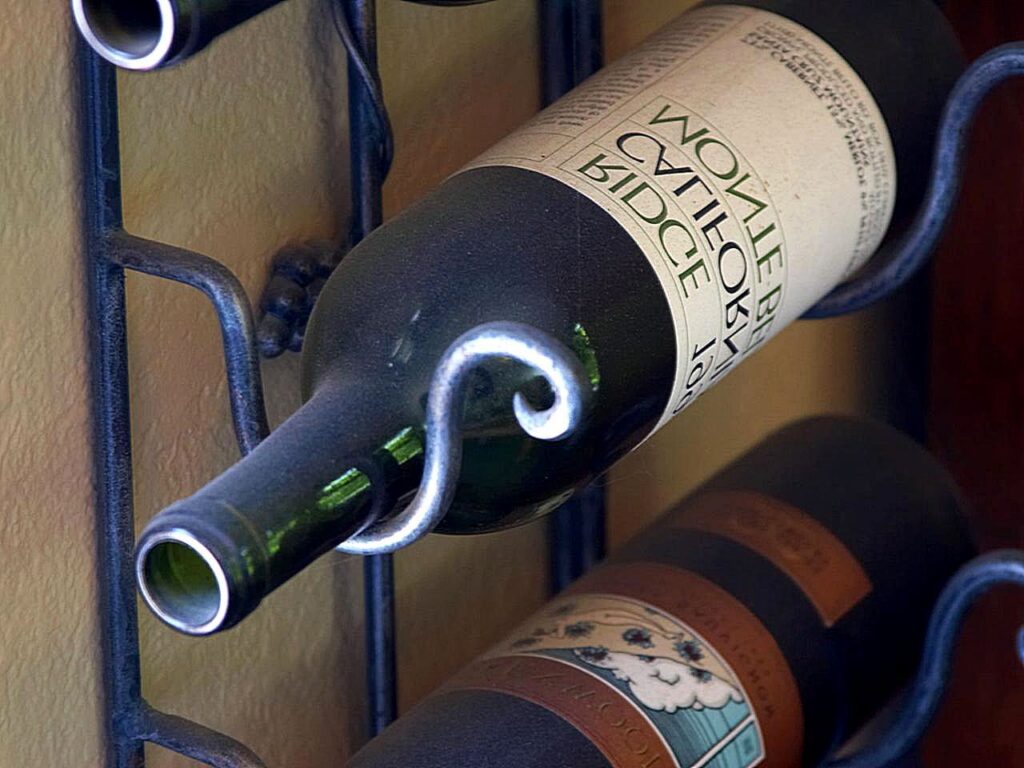

Distinguish replacement value, an asking price and executable sale proceeds. Liv-ex describes transaction prices, firm bids and offers separately from list prices. For a particular lot, condition, quantity, costs and the relevant market all move the number. A price for the reference wine is not an offer for your bottles.
Imagine a case advertised at $12,000 while an executable dealer offer is $9,500. Neither number alone explains the final proceeds after fees and transport. If a proposed investment structure uses the higher number for its opening valuation, ask who can challenge it and how later valuations will be established. A smooth-looking quarterly statement can conceal a difficult sale market.
For fund exposure, ask whether the person setting valuations is independent of the person paid on reported performance. Look at audit arrangements, pricing exceptions and what happens when comparable sales dry up. No legal structure can authenticate wine, find buyers or make a disputed price reliable; that is the investment operation's job.
The tax rate is only half of the economic question
A high potential tax rate makes wine worth a look, but it does not tell you insurance will improve the outcome. The comparison has to include when tax would otherwise arise, what the structure adds in expenses, how long the capital stays invested and how the family expects to take value out.
For wine held without sale, appreciation may remain unrealized for years. A model that charges capital-gains tax annually on that same buy-and-hold exposure can overstate direct ownership's tax drag. An actively traded strategy or a lending fund may create different income and timing. Model the actual investment, not an assumed annual sale.
Now consider costs. The underlying exposure may involve storage, property insurance, transport, authentication, dealing spreads and manager fees. A fund can add administration, audit costs and performance-based compensation. The insurance arrangement adds its own charges, including mortality and administration costs, with terms depending on the actual contract. Ask which costs are already included in a quoted net return so they are neither omitted nor counted twice.
For a selected sensitivity test, suppose a $1 million allocation gains $50,000 before incremental insurance costs and adds $12,000 of annual policy cost. The cost consumes 24% of that gain, leaving $38,000 before any other unmodeled items. This is arithmetic, not a market quote or cash yield. If the gain is unrealized, it may provide no cash for charges. Costs can continue in flat or declining markets.
The right comparison uses the same underlying return assumptions wherever possible. It should show a taxable investment alongside the proposed insurance arrangement, include costs at both levels and distinguish surrender value from death-benefit proceeds. The person preparing the model should be able to explain every assumption without relying on a rising wine index to do the work.
Also model how policy value reaches the family. Section 72 distinguishes surrender, withdrawals, loans and modified endowment contracts. A non-MEC loan is not a guarantee of permanent tax-free access; lapse or surrender with debt can create taxable income. MEC distributions and loans generally reach gain first, and an additional tax can apply unless an exception is met. Section 101 generally excludes qualifying death benefits from income, subject to exceptions; estate treatment is separate. Use the actual funding and exit assumptions.
Ask for an early-exit scenario as well as a long holding period. A family may need capital for a business acquisition, a divorce settlement or a move abroad. Insurance that works only if nothing changes for decades deserves a different assessment from a plan that survives realistic interruptions. Our explanation of PPLI costs and economics provides the broader framework for that comparison.
The collection can wait. Policy obligations may not.
Physical bottles do not pay a coupon. A wine-related loan or business investment may generate cash, but has different risks. Bottle sales depend on finding a buyer and completing inspection and settlement; fund interests may impose notice periods, gates or suspensions. Match those terms to policy charges and other obligations.
In a hypothetical stress case, a wine-related fund delays redemptions for twelve months just as the family's other assets decline. The policy still needs to operate. Which liquid assets cover charges? Who monitors the reserve? How would a death claim, permitted withdrawal or change of investment be handled? Obtain answers under the actual contract rather than assume an insurer will sell bottles immediately.
A separate liquidity reserve can make sense, but no universal percentage tells you how big it should be. That depends on the policy, the insured, the charges, the investment terms and the stress events you can realistically imagine. Planning to borrow instead does not make the problem go away, because a loan brings its own eligibility, cost and repayment questions.
Insuring the wine and buying life insurance solve different problems
For cooling failures, theft or breakage, review collection property insurance. Chubb's wine and spirits page describes coverage for damage caused by utility interruption or climate-control equipment breakdown. Actual terms, exclusions, limits, storage requirements and availability depend on the issued policy and the jurisdiction. We mention it as an example, not an endorsement or a coverage decision.
PPLI does nothing for that risk. Wine held as an underlying investment can be damaged or stolen while the life policy carries on unaffected. Whoever manages or owns the wine has to insure it and know who is entitled to claim.
For a private cellar, review what happens during transit, temporary display, movement to another property and storage with a merchant. Check the insured values against the valuation method and identify deductibles and excluded causes of loss. A family can make substantial progress here without deciding anything about PPLI.
There is also a distinction between insurance value and market risk. Cover for physical damage does not ordinarily mean protection against a disappointing auction price or a change in collector demand. Read the actual coverage. A cellar can remain perfectly intact while its sale value falls.
Plan separately for enjoyment, inheritance and investment
Return to the hypothetical $3 million collection. After discussing their intentions, the owners identify $1 million of wines they want to retain and enjoy, $800,000 they may eventually leave to a child and $1.2 million acquired mainly for investment. Those figures describe choices, not tax outcomes. Each part needs a different conversation.
The drinking collection remains a personal asset, with an inventory, appropriate insurance and clear ownership. The intended inheritance is reviewed with estate counsel: who should receive it, who can manage it, and what happens if that person would prefer cash? The investment portion can then be assessed for retention, an orderly sale or direct investment management. None of those decisions requires assuming a wine allocation inside PPLI will be available.
The family also has a separate liquid portfolio. Review it against insurance needs, time horizon, taxes, control limits and costs, and compare the realistic alternatives. The review may support PPLI for that allocation, or it may conclude that no policy on offer is worth its cost. Either is a good outcome.
Inheritance deserves its own tax comparison. Under Section 1014, qualifying property acquired from a decedent generally receives a basis related to its value at death, subject to statutory exceptions and valuation rules. That can mean a step up or a step down. It concerns income tax on a later sale, not estate tax, and lifetime gifts and trust arrangements can be treated differently.
For a collection intended to stay in the family, selling now may create a tax cost that retention would avoid or postpone. For a family that needs diversification or has no interested heir, retaining everything for a possible future basis adjustment may be equally unsuitable. The decision belongs in an integrated estate and liquidity analysis, not in a sales illustration that considers only one tax rate.
Life insurance may help provide liquidity to beneficiaries so the collection is not sold under pressure. Whether PPLI is the appropriate type depends on the wider circumstances. The ownership of the policy, beneficiary designations, estate inclusion and funding arrangements require specific advice. There is no need to force the wines into the policy to explore that separate purpose.
Does an offshore policy change the answer?
A U.S. taxpayer keeps U.S. tax obligations whether the policy is issued at home or abroad. A structure that works for a resident of another country cannot simply be lifted into an American family's plan. Carrier domicile, local investment rules and U.S. tax treatment are three separate questions. Nothing in this article suggests that an offshore jurisdiction lets you keep enjoying bottles held as an insured investment.
For example, Luxembourg Circular Letter 26/1, section 7.3.2 allows specified type D dedicated funds to hold financial instruments and bank accounts and nothing else, so personally owned bottles are out. The contract's date and transition rules, the permitted vehicle and US treatment each need their own review. Compare the related fine art and PPLI analysis.
Keep the retirement-account rules distinct. The IRS guidance on section 408(m) includes alcoholic beverages among collectibles for IRAs and specified individually directed qualified-plan accounts. That rule is about retirement accounts and says nothing either way about PPLI eligibility. Separately, section 1(h)(5) uses a collectibles definition for capital-gain taxation, so the term remains relevant outside retirement accounts.
For a family with more than one country of residence or citizenship, the analysis also needs to consider how each relevant jurisdiction treats the owner, policy, investments and distributions. A tax result acceptable in one country may not be recognized in another. Obtain advice coordinated across the actual jurisdictions before changing ownership or committing capital.
The first useful conversation starts with your collection
You do not need a perfectly organized family office to begin. A reliable inventory, an estimate of cost basis, storage details and a short explanation of your intentions will reveal the main questions. Separate the wines you want to keep from the capital you could commit for a long period. Be candid about access: if you expect to select bottles, trade personally or draw money at short notice, say so at the outset.
For any proposed insurance allocation, the next discussion should produce answers you can check:
- What exactly would the insurer own, and who has confirmed that this asset is acceptable?
- Who makes investment decisions, and what communications or personal-use rights must the family give up?
- Which account is tested for diversification, and is any proposed look-through treatment supported?
- What tax arises before funding, including any sale or transfer of existing wine?
- Who confirms title, provenance, physical insurance and valuation, and who pays for that work?
- How are charges and other obligations met when investments cannot be sold?
- How does the proposal compare with keeping the wine outside insurance and using a different financial allocation?
The answers will show whether the next step is an investment review, better collection administration or a different allocation. If acceptance, title, control or liquidity is still open, write it down and resolve it before committing capital. An attractive tax illustration is not the same as a finished proposal.
You can ask about PPLI and collection planning with a general description of your tax residence, whether the wines are for enjoyment or investment, and any sale you are considering. Hold back detailed inventories until a secure way to share them has been agreed, and ask who would carry out each part of a review. We can help you frame the questions; product availability and your own tax and legal advice come later, from the people responsible for them.
Updated 17 September 2026. Published by PPLI.com. All examples are hypothetical. This educational analysis is not an individualized tax or legal opinion, an insurance quotation or an offer of a wine investment. Actual treatment depends on ownership, residence, the contract and its operation. Primary sources appear beside the claims they support. See our editorial standards.
Wine collections and PPLI: questions answered
Can I put my existing cellar into PPLI?
Do not assume the insurer will accept it, that the transfer will be tax-free or that you can keep drinking from it. Work through the proposed asset, the insurer's rules, ownership and control, the tax on funding and diversification. We did not find a verified wine-specific insurance-dedicated product available to buy today.
Is the federal tax on wine always 28%?
No. The 28% figure is a maximum rate for qualifying long-term collectibles gain. Holding period, asset classification and the capital-gain calculation matter. NIIT and state taxes may apply separately; a fund interest can also require collectibles analysis.
Does selling wine to pay a premium avoid tax on its gain?
No. Work out the tax on the sale first, then see what is left for a premium. Section 1035 covers specified contract exchanges, not a swap of wine for insurance.
Does a rise in wine value require an immediate sale?
Not necessarily. The diversification regulation includes a rule for qualifying market fluctuations, and acquisitions can affect its application. Review the tested account, transactions and contract terms instead of assuming every change in weight requires rebalancing.
Does PPLI cover damage to the bottles?
No. That is the job of collection property insurance. Check who insures the actual wine, for what value, with which exclusions and who can claim. Physical-loss cover will not protect you against falling resale prices either.
Sources and further reading
- 26 U.S.C. Section 7702: definition of a life insurance contract.
- 26 C.F.R. Section 1.817-5: diversification, investment aggregation and conditional look-through treatment.
- IRS Revenue Rulings 2003-91 and 2003-92: investor control and ownership of investment interests supporting variable contracts.
- 26 U.S.C. Section 1001 and Section 1035: gains on dispositions and specified insurance-contract exchanges.
- IRS Publication 550, Tax Topic 409 and net investment income tax guidance: capital gains, collectibles and NIIT.
- 26 U.S.C. Section 1014: basis of qualifying inherited property.
- IRS guidance on collectibles in individually directed retirement accounts: the distinct Section 408(m) regime.
- Liv-ex exchange information and Chubb wine and spirits coverage information: primary commercial sources for market-pricing context and an example of collection property insurance. Neither source endorses this article or a PPLI investment.

Eldar leads PPLI.com’s strategy, research and partnerships. He acquired PPLI.com in 2020 and has worked on private placement life insurance since then.
Use the consultation form to describe your question and the support you are seeking. Review the Privacy Policy before sharing personal information.
Prefer to begin with a single question? Write to info@ppli.com