Premium financing in Singapore: how it works and what happens when rates rise
Premium financing in Singapore means a private bank lends most of the single premium for a large life policy, usually a US dollar universal life policy, and takes the policy as security. The loan is sized against the policy's day-one surrender value and charged at a floating rate, now usually SORA or SOFR plus a margin. The case for it rests on the policy crediting more than the loan costs. Neither number is fixed: the insurer declares the crediting rate above a guaranteed minimum, and the loan rate moves with the market. If rates rise or the cash value falls, the bank can ask for more collateral or a part repayment, and failing that it can surrender the policy. For an individual the interest is generally not tax deductible. It can suit a family that needs the death benefit anyway and has ample liquid assets to meet calls. It does not suit anyone relying on the spread to pay the interest.
Singapore law, MAS guidance and published bank and insurer material as at 21 October 2026. Not a view on any bank's facility or insurer's policy.
PPLI.com is a research publisher, not an insurer, broker or financial adviser, and is not licensed by the Monetary Authority of Singapore. Nothing here is an offer of insurance. To buy a policy, deal with an insurer or adviser licensed or exempted by MAS and check it on the MAS Financial Institutions Directory.
What premium financing is
A family wants a large death benefit, say US$10m, for estate liquidity or to equalise an inheritance. A single premium universal life (UL) policy might cost US$2m. The family pays part, a private bank lends the rest, and the policy is assigned to the bank. In Chinese-language marketing the same arrangement is sold as 保费融资.
The pitch is leverage: US$600,000 of the family's money pays for a US$2m premium. If the policy credits more than the loan costs, the family gains; if less, it pays the difference every year, in cash.
It is a lending decision bolted onto an insurance decision, and most problems come from treating the two as one product.
How the loan is sized
A bank lends against what it could recover by surrendering the policy: the surrender value, not the premium and not the death benefit. A single premium UL policy usually has a day-one surrender value below the premium because of early-year surrender charges, and the bank advances a percentage of that value.
We found no regulator publication giving typical advance rates in Singapore. What public sources report:
- A 2022 Straits Times article, republished by Nanyang Business School, reported lenders are usually entitled to up to 90% of the surrender value (secondary).
- Providend, a Singapore adviser, gave a UL example with a maximum loan of 90% of day-one cash value, which came to about 72% of the premium (secondary).
- OCBC's published terms for one financed plan require part repayment if the loan exceeds 90% of collateral value, or another level the bank sets, failing which the bank may surrender the policy.
- Income Insurance gave an example, for a single premium annuity plan rather than a UL policy, of a bank lending S$500,000 of a S$700,000 premium, about 71% (secondary).
In the two examples we found, the loan came to roughly 70% of the premium. These are reported examples, not market rates; each bank sets its own limits by client and insurer.
The loan rate: SORA, SOFR and the end of SIBOR and LIBOR
These loans are almost always a floating benchmark plus a margin, and the benchmarks have changed.
- Singapore dollar loans. MAS states that SIBOR will be discontinued immediately after 31 December 2024, and that SOR has been discontinued or is no longer representative. The Association of Banks in Singapore says SORA has replaced both as the key benchmark. MAS publishes SORA daily.
- US dollar loans. The UK Financial Conduct Authority records that US dollar LIBOR panel settings ended at end-June 2023, with the last synthetic settings published on 30 September 2024. US dollar facilities now generally reference SOFR, published by the Federal Reserve Bank of New York.
Many financed policies here are in US dollars, so their loans move with SOFR and US monetary policy. Rates move fast: the Straits Times reported in July 2022 that SORA had passed 1%, up from about 0.2% before the Federal Reserve began raising rates that March. A policy financed in 2021 would have been illustrated on loan costs far below those that followed.
The arithmetic: crediting rate against loan rate
The policy credits interest on the account value; the bank charges interest on the loan. The family pays the bank in cash, while the crediting stays inside the policy.
Why the spread is not an arbitrage
- The UL crediting rate is declared by the insurer. Only the guaranteed minimum is promised. Singlife's 2024 launch release for an indexed UL gives a fixed account minimum of 2% a year from year two; a 2026 trade report on a Manulife Singapore indexed product gives 0.50% (secondary). Both sit well below the loan rates used in the table below.
- An indexed UL (IUL) has a cap and a floor. Singlife's release described a 0% floor and a then cap of 11% a year, non-guaranteed. In a flat or falling year the index account credits nothing while the loan keeps charging.
- Charges come out first. Cost of insurance and policy fees reduce the account, and cost of insurance rises with age.
- The loan rate floats. Unless the borrower has hedged it, every rise passes straight through.
A worked table: US$2m premium, 70% loan, three rate scenarios
Illustrative assumptions, not any bank's or insurer's terms: US$2,000,000 single premium UL; 70% loan of US$1,400,000, interest only; US$600,000 of the family's own cash; 4.0% a year credited on the full US$2,000,000; loan rates flat for ten years.
Two simplifications matter. First, the arithmetic leaves out cost of insurance, premium and policy charges and surrender charges. In a real policy these come out of the account every year, and cost of insurance rises with age, so the true figures are worse than the table shows. Second, crediting is assumed to be 4.0% every year, which no UL policy promises.
How to read the columns. The annual carry gap is the year's loan interest less the 4.0% credited on the borrowed US$1,400,000: what the borrowed money costs beyond what it earns. The 10-year gap, paid in cash is that figure times ten. The 10-year gap, if added to the loan assumes the family borrows each year's gap instead of paying it, so it compounds at the loan rate. The return on the US$600,000 cash is the US$80,000 credited on the whole US$2,000,000, less the year's loan interest, divided by the US$600,000 the family put in. It is a crediting figure inside the policy, not a cash return the family can spend.
| Loan rate (all-in) | Annual interest on US$1.4m | 4.0% credited on the borrowed US$1.4m | Annual carry gap | 10-year gap, paid in cash | 10-year gap, if added to the loan | Return on the US$600,000 cash |
|---|---|---|---|---|---|---|
| 4.5% | US$63,000 | US$56,000 | US$7,000 | US$70,000 | US$86,017 | 2.83% a year |
| 5.5% | US$77,000 | US$56,000 | US$21,000 | US$210,000 | US$270,382 | 0.50% a year |
| 6.5% | US$91,000 | US$56,000 | US$35,000 | US$350,000 | US$472,305 | minus 1.83% a year |
Before policy charges, the break-even loan rate is the crediting rate, here 4.0%; above it the borrowed money loses money every year. At 5.5% the family has borrowed US$1.4m to turn a 4.0% return on its own cash into 0.5%, and taken on margin, rate and currency risk to do it. If the gap is added to the loan rather than paid, it compounds: at 6.5% the ten-year shortfall grows from US$350,000 to about US$472,000, and a larger loan makes a margin call more likely.
Surrender charges and the early years
Surrender charges run down over several years, so early surrender value sits below the premium; OCBC's material warns early termination usually involves high costs. With a loan, the family's equity is surrender value less loan. A surrender in year two or three, by choice or by the bank, repays the loan from a reduced value and can wipe out most of the cash put in, on top of the interest already paid.
Margin calls: what the bank can do
The bank watches loan against surrender value. The ratio rises if surrender value falls (low crediting, charges, an insurer downgrade) or if unpaid interest is added to the loan. We have seen no standard Singapore form, but published bank disclosures describe the same broad toolkit:
- A top-up demand for cash or other collateral, as OCBC's terms and DBS Hong Kong's risk disclosure both describe.
- Partial surrender to reduce the loan, lowering the death benefit.
- Full surrender if the shortfall is not cured or payments are missed, with the borrower liable for any balance.
- Recall. The Straits Times described uncommitted facilities the bank can recall, and set-off terms letting it apply policy proceeds to other debts (secondary).
Check whether the bank can change the advance rate it applies to an insurer; that alone can create a call.
How small the cushion can be
Illustrative assumptions: day-one surrender value of US$1,800,000 (90% of premium); loan of US$1,400,000, or 77.8%; a call if the loan exceeds 85%. The call comes when surrender value falls about 8.5%, to roughly US$1,647,000. At US$1,600,000, restoring 77.8% would need about US$155,600 of cash.
Currency: a US dollar policy and Singapore dollar income
A US dollar loan against a US dollar policy is matched; the mismatch is with the family's Singapore dollar income. On the 5.5% row, US$77,000 of interest is S$100,100 at an assumed S$1.30 and S$107,800 at S$1.40. A Singapore dollar loan reverses the problem: a weaker US dollar shrinks the collateral and can trigger a call. DBS Hong Kong's disclosure flags this risk.
Tax: interest is generally not deductible
Section 14(1)(a) of the Income Tax Act 1947 allows a deduction for interest on money borrowed only where the Comptroller is satisfied it is payable on capital employed in acquiring the income. Section 15(1) disallows private expenses and sums employed as capital. A policy held by an individual for family protection produces no taxable income to set the interest against, so for an individual the interest is a cost with no tax relief.
We found no IRAS guidance specific to premium financing. A company-owned policy raises different questions. US persons should read US citizens in Singapore and life policies.
What MAS expects of the people selling it
We found no MAS notice, circular or guideline specifically on premium financing of life policies. The general rules apply.
- Fair dealing. MAS's Guidelines on Fair Dealing (FSG-G04), last revised 30 May 2024, set five outcomes. As summarised by Rajah & Tann (secondary), they include that products suit their target customer segments and that customers receive accurate, relevant and timely information. Allen & Gledhill reports the revised guidelines apply to all financial institutions and products (secondary).
- Recommendations on investment products. MAS Notice FAA-N16 sets know-your-client and needs analysis duties for advisers recommending investment products. Its MAS summary does not mention financing.
Ask for the needs analysis in writing, and for illustrations at the guaranteed minimum crediting rate with a loan rate two or three points above today's. Keep them.
Financing a PPLI policy is a different exercise
PPLI is an investment-linked policy holding a portfolio, with no declared crediting rate, so there is no spread to finance against. The usual route is a lombard loan, secured either on assets held outside the policy or, where the insurer agrees, on the policy itself by assignment or pledge; lenders normally want the insurer's written acknowledgement before they lend. Lending values then follow the assets and the policy's surrender value. Swissquote, a Swiss bank, gives illustrative ranges of 60% to 70% for investment-grade bonds, 40% to 50% for equities and 40% to 60% for unit-linked life policies, and a fall in value can lead to a call for more collateral, a part repayment or a sale. Each bank sets its own terms. See what a policy can hold and the UL, IUL, VUL and PPLI comparison.
Who it can make sense for, and who it does not
| Can make sense when | Usually does not when |
|---|---|
| The death benefit is needed and would be bought anyway | The main reason is the projected spread |
| Liquid assets well beyond the premium can meet calls | A call would force a sale of property or illiquid holdings |
| Currency risk is understood and accepted | No one has run the S$ numbers |
| Interest can be paid from income throughout | Interest would be added to the loan |
A family expecting a business sale may decide better after it. The Liquidity Event Planner sets out the sequence.
Worked examples
Hypothetical, with invented names and stated assumptions.
Example 1: Mrs Lim, financed in a low-rate year
Assumptions: Mrs Lim, 58, bought a US$2m single premium UL in 2021 with a US$1.4m floating-rate loan at a US dollar benchmark plus 1%. We assume the loan cost about 1.1% in 2021 and about 6.3% in 2024; these are round illustrative figures, not quoted benchmark fixings. The policy credits 4.0% throughout, and policy charges are again left out.
What the arithmetic points to: in 2021 the borrowed money earned about 2.9 points, roughly US$40,600 a year. By 2024 it costs about 2.3 points, roughly US$32,200 a year, in cash. The reason for borrowing has reversed. She can keep paying, repay part of the loan, or accept a lower death benefit; surrendering in year three would crystallise surrender charges.
Example 2: Mr Goh, a margin call he could meet
Assumptions: Mr Goh holds the policy in the cushion example. In year two surrender value is US$1.6m. He has US$3m in a portfolio at the same bank.
What the terms point to: the loan is 87.5% of surrender value, above the trigger. He repays about US$156,000 or pledges part of his portfolio, and keeps the policy. The call costs him liquidity, because he planned for it.
Example 3: Ms Tan, financed on income alone
Assumptions: Ms Tan, paid in Singapore dollars, finances a US$1m UL at 70% with few liquid assets, paying interest from salary. She has six months without income.
What the terms point to: missed interest is typically a default. The bank may surrender the policy and pursue her for any shortfall. The Straits Times described an elderly couple who had not budgeted for instalments and surrendered a US dollar UL early, at a loss.
Questions to ask before signing
- What is the benchmark and margin, and can the margin change?
- What advance rate does the bank apply to this insurer's surrender value, and can it change it during the loan?
- At what ratio is a top-up called, how long is the cure period, and can the bank surrender without notice?
- Is the facility committed or repayable on demand, and are there set-off rights?
- What is the policy's guaranteed minimum crediting rate, and what does the illustration show at that rate with a loan rate two or three points higher?
- From which assets would you meet a call, and in what currency?
Where this sits
Financing is a way of paying for a policy, not a reason to own one. The UL, IUL, VUL and PPLI comparison compares the types, and large life policies in Singapore covers sizing. For estate liquidity, see legacy planning in Singapore and trust and revocable nominations. For a business sale, see the Liquidity Event Planner. See also investment flexibility and private placement life insurance in Singapore: what it is and when it suits a resident. If you have a question about the research, ask a Singapore research question.
Premium financing in Singapore: questions
How does premium financing work in Singapore?
A bank lends part of the single premium for a large life policy, usually US dollar universal life, and takes the policy as security. The loan is sized against surrender value, floats, and is usually interest only.
How much will a bank lend against a universal life policy?
There is no published market standard. Secondary sources report advances of up to about 90% of the surrender value, and since the day-one surrender value is below the premium, the loan in the published examples came to roughly 70% of the premium. Each bank sets its own limits.
What interest rate is charged on premium financing?
A floating rate: a benchmark plus the bank's margin. Since SIBOR ended after 31 December 2024 and US dollar LIBOR panels ended in June 2023, Singapore dollar loans generally reference SORA and US dollar loans SOFR. Unless the borrower hedges it, every rise passes through.
Is premium financing worth it?
Only if the policy is needed anyway and the family can pay interest and meet calls from other assets. The spread is not guaranteed; when the loan rate exceeds the crediting rate, the borrowed money loses money every year.
What happens if interest rates rise?
The interest bill rises with the benchmark. If the policy's crediting rate does not keep pace, the family pays the difference in cash or adds it to the loan, which raises the loan-to-value ratio and the chance of a margin call.
Can the bank surrender my policy?
Typically yes. Published bank terms allow it to demand part repayment or more collateral if the loan exceeds a set share of policy value, and to surrender the policy if the shortfall is not cured, with the borrower liable for any balance.
Is the interest on premium financing tax deductible in Singapore?
For an individual, generally not. The Income Tax Act 1947 allows interest only where it is payable on capital employed in acquiring income, and a life policy held for family protection produces no taxable income. We found no IRAS guidance specific to premium financing.
Can you premium finance a PPLI policy?
Not in the same way. A PPLI policy has no declared crediting rate, so the usual route is a lombard loan, secured on assets outside the policy or, where the insurer agrees, on the policy itself by assignment or pledge. Lending values and calls then follow the value of the assets and the policy's surrender value, and each bank sets its own limits.
Sources and authorities
Benchmarks: MAS: Interest Rate Benchmarks Transition; MAS: SORA; Association of Banks in Singapore: SIBOR FAQs; UK FCA: LIBOR transition; Federal Reserve Bank of New York: SOFR. Tax (laws.sg mirror of Singapore Statutes Online; official text at sso.agc.gov.sg): Income Tax Act 1947 s 14, s 15. Conduct: MAS Guidelines on Fair Dealing (FSG-G04); MAS Notice FAA-N16. Bank and insurer publications: OCBC: financed plan terms; DBS Hong Kong: premium financing risks; Singlife: indexed UL launch, September 2024. Lending against policies (secondary): Fieldfisher, lending against life assurance policies; Swissquote on lombard loans. Secondary: Straits Times via Nanyang Business School, July 2022; Providend; Income Insurance; Hubbis on Manulife Singapore indexed products, August 2026; Rajah & Tann on the fair dealing outcomes; Allen & Gledhill on the scope of FSG-G04.
Research checked 21 October 2026 against the MAS, ABS, FCA and New York Fed pages, statutes and publications linked above; worked figures computed by PPLI.com from stated assumptions. Our editorial standards explain how errors are corrected.
PPLI.com is not licensed by the Monetary Authority of Singapore and does not give financial advice. This is general information about Singapore law and other tax systems, not an offer or invitation to enter into any contract of insurance. Policies issued by insurers not licensed in Singapore are not covered by the Policy Owners' Protection Scheme or by the nomination rules in the Insurance Act 1966.
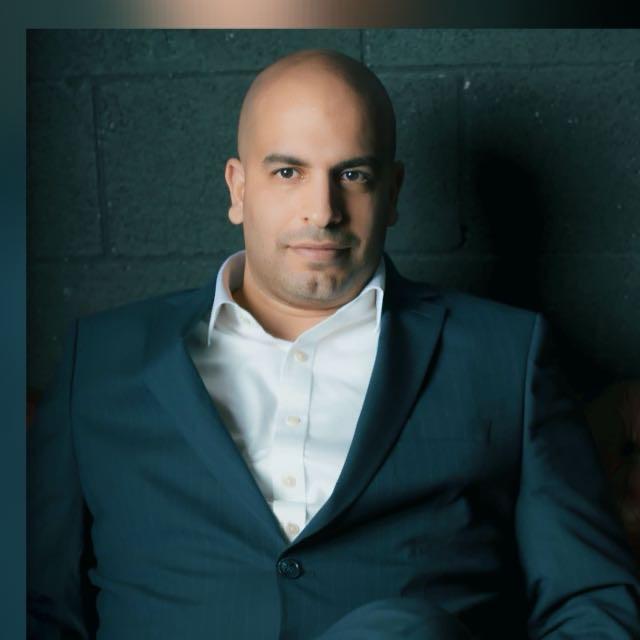
Eldar leads PPLI.com’s strategy, research and partnerships. He acquired PPLI.com in 2020 and has worked on private placement life insurance since then.
Questions about this research are read by a senior specialist and answered in writing. PPLI.com does not sell, recommend or arrange policies. Review the Privacy Policy before sharing personal information.
Prefer to begin with a single question? Write to [email protected]